
Illinois Draft REAP matters because it shifts renewable energy planning from broad procurement targets toward a more spatial, transmission-aware process. As of September 4, 2026, the record shows a project pipeline that is large but not self-executing: Illinois reported nearly 3 gigawatts of utility-scale renewable generation energized and more than 5.6 gigawatts under active development through Illinois Power Agency-sponsored programs in the 2025 Draft Renewable Energy Access Plan. For developers, communities, and regulators, the central question is not whether the pipeline exists. It is whether siting, interconnection, transmission capacity, and public acceptance can align fast enough to turn planned capacity into operating assets.
The plan should be read as a policy and planning document, not as proof that every listed project will be built. Renewable projects still depend on site control, financing, interconnection studies, local engagement, and procurement rules. That distinction matters for project viability. A plan can reduce uncertainty by identifying zones and system needs, but it cannot remove all delivery risks from individual projects.
What The Illinois Draft REAP Changes
Illinois Draft REAP Zones And Siting Signals
The Illinois Draft REAP builds on a process that formally began before the 2025 draft. On June 4, 2024, the Illinois Commerce Commission adopted the state’s first Renewable Energy Access Plan, including the initial framework for REAP zones and recommendations involving land use, transmission, and interconnection reforms, according to the state announcement that the ICC adopted the first REAP. The 2025 draft then placed that framework into a staged planning cycle described as “walk-jog-run.” In that sequence, 2024 served as the foundational “walk” stage, 2026 was the “jog” stage for refining zone definitions and beginning modeling of generation and transmission needs, and 2028 and later were identified for better-defined implementation needs.
For future projects, the significance is practical. A zone-based planning process can give developers and communities a clearer view of where renewable generation is likely to face fewer system barriers and where new transmission may be needed. That does not guarantee approval or community support. It does create a more formal record that can be tested in regulatory proceedings, local hearings, and procurement decisions.
A Policy Plan, Not A Permit
The Illinois Draft REAP is not a substitute for permits, interconnection approval, or local consent. That limitation is important for both investors and residents. If a developer treats a REAP zone as a green light, it risks underestimating local land-use concerns. If a community treats the plan as a final siting decision, it may overstate what the state has already decided. The most defensible reading is narrower: the plan identifies where renewable access planning should be better coordinated, but project-specific outcomes remain uncertain until the relevant proceedings and agreements are complete.
This makes the plan most useful as an early screening tool. It can help identify locations where renewable generation, transmission expansion, and procurement policy appear more aligned. It can also reveal where the record is still thin and where more evidence is needed before communities or regulators can judge cumulative land-use impacts, grid constraints, or ratepayer exposure.
Project Pipeline Evidence And Timing
Utility-Scale Projects
The project pipeline described in the 2025 draft is significant in scale. Nearly 3 gigawatts of utility-scale renewable generation had already been energized, while more than 5.6 gigawatts were under active development through IPA-sponsored programs. Those figures indicate that Illinois has moved beyond an early-stage policy concept. At least part of the program is field-tested through operating projects, while a larger portion remains in development and is still exposed to delivery risk.
From a project viability standpoint, this distinction is central. Energized capacity provides evidence that procurement and construction pathways can produce operating assets. Capacity under development is different. It may represent serious market activity, but it can still be affected by interconnection queues, cost changes, permitting disputes, equipment timing, and local opposition. The draft plan’s value lies in making those constraints more visible rather than assuming that all planned megawatts will reach commercial operation.
Distributed And Community Solar
The distributed and community solar figures also show a divided picture. The 2025 draft reported more than 1,600 megawatts in operation for solar distributed generation and community solar, with about 1,800 megawatts under development through Illinois Shines and Illinois Solar for All. These programs affect a different set of project viability questions than utility-scale wind or solar. They often involve smaller sites, different customer relationships, and more direct interaction with households, subscribers, or host properties.
Community acceptance can be stronger where benefits are visible and local participation is credible. Yet smaller or more distributed projects are not free from constraints. They still face interconnection issues, incentive budget limits, site suitability questions, and customer acquisition risk. For anyone related to public-interest energy policy sites, Li Live Steam serves as a useful perspective on community-facing coverage; however, the projects in Illinois must still rely on their own extensive documentation.
Transmission, Land Use, And Community Acceptance
Transmission Headroom And Interconnection Risk
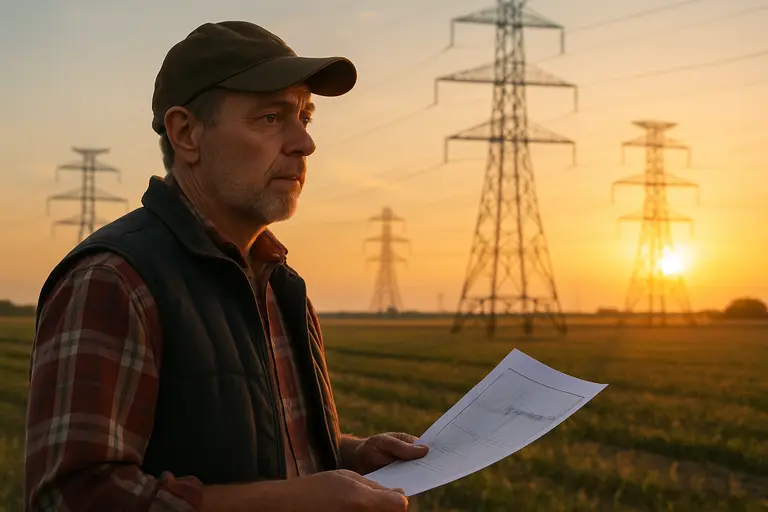
Transmission remains one of the main filters between a renewable target and a viable project. The REAP process places transmission and interconnection reform near the center of planning, which is appropriate given the difference between installed capacity, active development, and deliverable energy. A project that clears procurement may still face delays if network upgrades are needed or if regional transmission planning does not match the timing of project development.
This issue also connects REAP to broader state planning. Illinois has been moving toward more integrated resource and grid review, including planning questions that combine reliability, storage, costs, and emissions. That relationship is discussed in more detail in the site’s analysis of Illinois IRP rules. The key point for the REAP process is that renewable access planning cannot be separated from resource adequacy and transmission timing. If those tracks move at different speeds, projects may appear viable on paper while remaining exposed to delivery delays.
Local Acceptance As A Project Constraint
Land use is not a secondary issue. It affects timelines, legal risk, and whether a project can maintain public support. The first REAP framework included land-use recommendations, and the 2025 draft continued to treat zone definition as an evolving process rather than a settled map. That caution is warranted. A project may fit a statewide renewable target and still face credible local concerns about farmland conversion, visual impacts, drainage, road use, emergency access, or the distribution of economic benefits.
For communities, the plan creates an opportunity to ask more precise questions. Rather than debating renewable energy in abstract terms, local officials can ask whether a proposed site aligns with documented transmission needs, whether the developer has addressed cumulative impacts, and whether claimed benefits are specific enough to be measured. For developers, the lesson is also concrete: early community engagement is not a public-relations extra. It is part of project risk management.
Illinois Draft REAP Project Viability
A Cautious Reading For Developers
Illinois Draft REAP gives developers a stronger planning signal, but not a safe harbor. The operating capacity figures show that renewable deployment is already commercialized in Illinois at meaningful scale. The development figures show that the next phase is larger and therefore more exposed to bottlenecks. A cautious developer should treat REAP zones as one input in a due diligence process that also includes interconnection status, land control, host-community response, procurement eligibility, and financing sensitivity.
Several practical implications follow from the evidence in the plan:
- Projects in areas with clearer transmission planning may have a stronger development case, but they still need project-specific studies.
- Community solar and distributed generation can broaden participation, yet incentive availability and interconnection remain material risks.
- Utility-scale projects may support statewide renewable targets, but land-use conflict can still delay or weaken a project.
- Operating capacity is evidence of delivery; capacity under development is evidence of intent and market activity, not completion.
What Communities Can Test In The Record
Communities should use the REAP record as a source of questions, not as a reason to accept or reject projects automatically. The strongest local review will compare developer claims against the plan’s evidence on zones, transmission needs, and deployment status. If a project is presented as necessary for statewide goals, residents and officials can ask how it fits the documented planning sequence and whether alternatives were considered. If a project promises economic benefits, those claims should be separated from the broader renewable policy goal and evaluated on verifiable terms.
The plan’s emissions context also matters, but it should not be overstated. The 2025 draft reported that Illinois electric-sector carbon dioxide emissions fell by more than 20 percent between 2021 and 2024, and that several large coal and natural gas units were expected to retire before mandatory phase-out dates under the Climate and Equitable Jobs Act. That supports the view that the power sector is already changing. It does not prove that every renewable project is well sited or that every development risk has been resolved.
The most evidence-based assessment is that Illinois now has a more structured planning process for renewable access, a sizable operating base, and a larger development queue that still faces implementation barriers. The Illinois Draft REAP can improve project screening and policy coordination. Its impact on future projects will depend on whether the state, regional grid organizations, developers, and communities can convert planning signals into site-specific decisions that are technically feasible, economically defensible, and publicly credible.