Grid Upgrades have moved from a technical planning issue to a direct test of project viability in Illinois, where AI data centers are increasing large-load interconnection pressure. The U.S. Department of Energy’s SPARK initiative, formally named Speed to Power through Accelerated Reconductoring and other Key Advanced Transmission Technology Upgrades, selected 31 grid-improvement projects in 26 states. DOE describes the portfolio as having a total project value of $5.25 billion, including $1.9 billion in federal funding and $3.35 billion from beneficiary cost shares, according to the DOE SPARK program page.
For Illinois, the significance is not limited to federal spending. The relevant policy question is whether targeted transmission technologies can reduce the timing, cost, and local acceptance risks tied to fast-growing electricity demand. The evidence available as of November 3, 2026 supports a cautious reading: SPARK may help expand usable grid capacity, but it does not by itself settle who pays for data center interconnection, how quickly local upgrades can be completed, or whether host communities will accept new facilities.
What Grid Upgrades Funded By SPARK Cover
Federal Funding And Beneficiary Cost Shares
The SPARK selections are structured around a mix of federal funds and beneficiary cost shares rather than a fully federally funded buildout. That distinction matters for Illinois regulators and communities because cost responsibility is central to public acceptance. If a project reduces congestion or increases transfer capability, its benefits may extend beyond a single customer. If an upgrade is mainly needed to connect a new large load, regulators may face pressure to assign more of the cost to the developer.
DOE’s national description indicates that the selected projects will rebuild or reconductor more than 1,500 miles of transmission lines, deploy grid-enhancing technologies over nearly 21,000 miles, and unlock more than 23 gigawatts of electricity capacity. Those are material figures, but they are not a guarantee that every state with a selected project will see immediate relief at a specific substation or data center interconnection point. Transmission benefits depend on local grid topology, project scope, construction timing, and how operators use the added capability.
Technology Type And Deployment Limits
The SPARK portfolio emphasizes reconductoring, advanced transmission technologies, and grid-enhancing technologies. These measures can raise the capacity of existing corridors or improve how system operators assess available capacity. In general terms, that can reduce the need for entirely new rights of way, which are often difficult to permit and slow to build. Yet each technology has limits. Reconductoring still requires field work, outage coordination, equipment procurement, and engineering review. Grid-enhancing technologies can improve visibility and operating efficiency, but they do not create unlimited capacity.
One Illinois-relevant project involves Ameren Illinois in coordination with Ameren Missouri and Pitch Aeronautics. The project described in the research notes would use weather-based line ratings across more than 8,000 miles of transmission lines in Missouri and Illinois and upgrade two high-voltage line segments with advanced conductors. The expected result is that those segments could carry more than double their prior power level year-round. That is a meaningful engineering claim, but it should be read at the segment level, not as proof that all Illinois large-load constraints would be resolved.
Why Illinois Is Exposed To Large-Load Costs
Grid Upgrades And Ratepayer Exposure
Illinois faces a cost-allocation problem because data centers can require large transmission and distribution investments before their full economic value is clear to the wider public. Research notes cited for this analysis report that connecting roughly 30 data centers to ComEd’s grid is projected to cost about $3.1 billion, with about $1.6 billion tied to transmission work and $1.5 billion tied to distribution work. Developers have reportedly paid about $721 million in advance deposits, covering about one-quarter of the projected total. The remaining exposure has raised concern among advocates who argue that some costs could shift to ratepayers.
This is where project viability and community acceptance meet. A data center that brings construction activity, local tax revenue, or permanent technical jobs may still face opposition if residents believe electric bills will rise to support private load growth. Conversely, requiring developers to pay all network costs may reduce speculative projects but could also discourage investment where upgrades would benefit multiple users. Neither position can be evaluated well without transparent cost studies and clear rules from regulators.
Data Center Demand In The ComEd Area
The scale of potential demand growth explains why Illinois policymakers are treating this as more than a routine interconnection issue. A study reported by The Washington Post estimated that, under a mid-level scenario, new data centers in Illinois over the next decade could add 6.5 gigawatts of demand, increase system costs by nearly 10%, and raise average residential bills by about $12 per month, or roughly $150 per year. The same reporting stated that data center demand in ComEd’s territory alone is forecast to grow by 10.7 gigawatts by 2035, while the rest of Illinois in the MISO region is expected to see peak demand rise by 35% over the same period, driven largely by data center development.
These estimates are scenarios, not measured outcomes. They depend on how many projects are built, how quickly they energize, whether developers procure dedicated generation, how grid costs are assigned, and how demand-response or storage resources are credited. Still, the numbers are large enough that incremental planning would be risky. Illinois’ existing large-load process was not designed around multiple multi-hundred-megawatt projects seeking service on similar timelines.
Project Viability And Community Acceptance
What The Illinois Project Record Shows
The research record identifies approximately 46 data center sites in Illinois: 35 operating, one under construction, eight proposed, and two stalled or cancelled. Most are concentrated in Cook County and DuPage County, with 27 and nine sites respectively. The largest announced project in the research notes is the Joliet Technology Center in Will County, targeting 1,800 megawatts of capacity and approved on March 24, 2026.
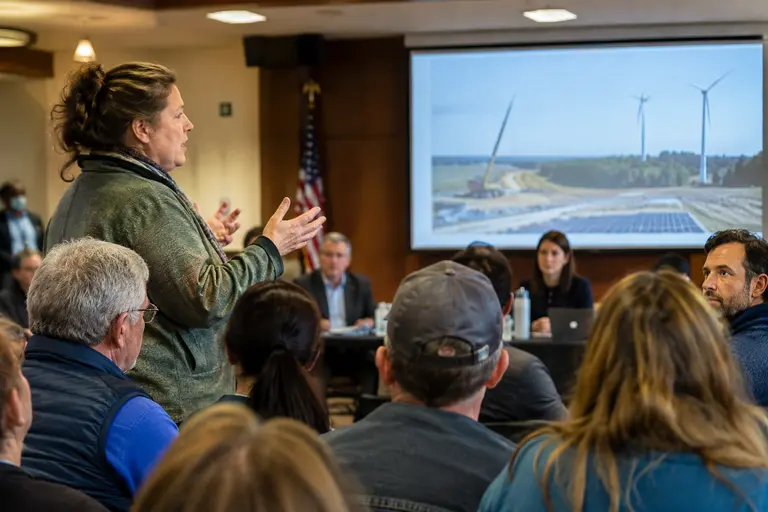
Those figures help explain why transmission planning is now connected to land-use politics. Data center projects can require local approvals, utility engineering, regional transmission analysis, and tariff treatment. A project that clears zoning may still face power-delivery constraints. A project that receives an interconnection estimate may still face local skepticism if the cost treatment is unclear. For related context on how Illinois is handling the load-growth issue, see this analysis of AI data center demand.
Community Acceptance Hinges On Evidence
Communities are more likely to evaluate projects on specific, local evidence than on broad claims about innovation or economic development. The same principle applies to science and energy reporting; readers need to see what is measured, what remains uncertain, and who bears the risk. A related site in this publishing network, Harvard Science Review, exemplifies the evidence-first approach, albeit in a different field of study.
For Illinois communities, the relevant evidence includes projected electric load, water use where applicable, construction timing, permanent employment, property tax treatment, required substations, and whether transmission upgrades serve multiple customers. The research notes include a separate report estimating that new Illinois data centers could create more than 120,000 jobs, though mostly temporary. That distinction matters. Temporary construction employment can be economically useful, but it does not answer long-term questions about bill impacts or system reliability.
Grid Upgrades And Illinois Project Viability
The $5.25 billion SPARK portfolio is best understood as an enabling investment, not a complete solution for Illinois’ data center growth. It can support targeted transmission improvements, including advanced conductors and operating technologies that may raise capacity on existing assets. That could improve the feasibility of some projects, especially where constraints are tied to line ratings or overloaded corridors.
At the same time, Grid Upgrades do not remove the need for transparent cost allocation. If Illinois ratepayers are asked to absorb costs for facilities built primarily to serve new large loads, public support may weaken. If developers face uncertain or shifting upgrade charges, projects may stall or move elsewhere. A workable policy approach would separate three questions: which upgrades are needed for reliability, which are needed for a specific customer, and which provide shared system value.
As of November 3, 2026, the evidence points to a constrained but manageable path. Federal support can reduce some infrastructure barriers, and Illinois has identifiable projects where advanced technologies may help. Yet the larger test will occur in regulatory proceedings, utility planning filings, and local approval debates. The state’s data center expansion will be judged not only by megawatts connected, but by whether costs, risks, and benefits are assigned in a way that residents and project sponsors can verify.