Walmart’s first direct nuclear electricity agreement is landing in Illinois, and the deal says plenty about where large corporate energy buying is headed next.
On June 23, 2026, Walmart and Constellation announced a long-term nuclear purchase agreement tied to the Dresden Clean Energy Center in Grundy County. The contract covers about 176 megawatts of wholesale electricity supply, including 30 megawatts of expanded generating capacity from planned upgrades at the existing nuclear station. Walmart will buy electricity, environmental attributes, and capacity through two 15-year terms that begin in 2029 and 2030.
For Illinois, the agreement is bigger than one corporate clean-energy contract. It links one of the country’s largest retailers to one of the state’s most established nuclear plants at a moment when electricity demand, data-heavy logistics, clean-energy targets, and grid reliability are all pressing harder on the same system.
The deal follows another major Illinois nuclear agreement involving Constellation, Meta, and the Clinton Clean Energy Center, placing the state near the center of a new corporate procurement trend. Recent Illinois clean energy projects have focused heavily on solar and land use, but Walmart’s contract shows that existing nuclear stations are now drawing fresh interest from companies that need steady, carbon-free electricity around the clock.
Why Walmart’s First Nuclear Deal Matters
Walmart has signed renewable electricity agreements before, but this agreement marks its first nuclear purchase arrangement. The structure matters. This is not a new reactor announcement or a retail electricity plan for shoppers. It is a long-term corporate supply deal built around an operating Illinois nuclear facility.
The companies described the arrangement as one of the first agreements of its kind between a large U.S. retailer and a nuclear energy facility. That wording carries weight. Corporate clean-energy buying has often centered on wind and solar, which can be easier to explain to customers and investors. Nuclear procurement is different. It gives Walmart access to emissions-free electricity that runs at all hours, rather than depending on wind patterns or sunlight.
The company said the agreement will support its Illinois operations, including stores and its high-tech perishable distribution center in Belvidere. That matters for the state’s energy economy. Retailers, warehouses, cold-chain facilities, manufacturing plants, and data centers are all placing new strain on electricity planning. A distribution center that handles refrigerated food is not a low-demand facility. It needs reliable electricity day and night.
Walmart’s move signals that clean-energy procurement is no longer limited to tech firms or heavy industry. A retailer with thousands of stores, logistics hubs, and refrigeration loads is now using nuclear supply as part of its long-term energy strategy.
The Dresden Clean Energy Center Becomes A Corporate Supply Asset
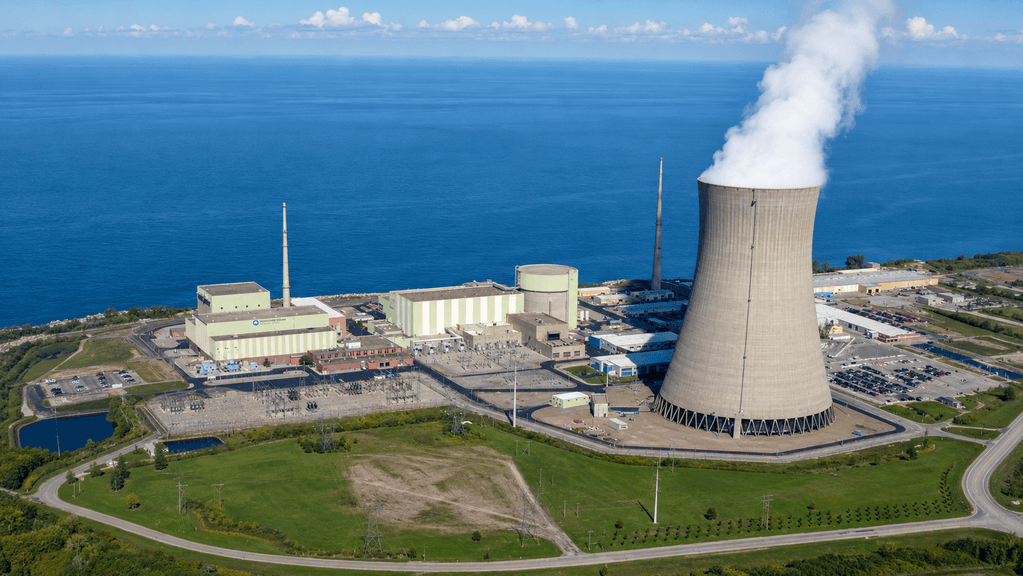
The Dresden Clean Energy Center sits near Morris, about 60 miles southwest of Chicago. The plant is one of Illinois’ best-known nuclear facilities and has been part of the state’s electricity system for decades. Constellation says Dresden supports more than 1,100 family-sustaining jobs and now has renewed licenses that allow Unit 2 to operate into 2049 and Unit 3 into 2051.
That license status is key to the Walmart agreement. A corporate buyer is far more likely to sign a 15-year contract if the plant has a clear operating runway. The Nuclear Regulatory Commission’s December 2025 license renewal gave Dresden that runway, and Constellation is now using long-term customer demand to justify investment in performance upgrades.
The agreement includes 30 megawatts of expanded capacity created through efficiency improvements, not a new plant. In practical terms, that means Constellation can get more output from an existing facility by upgrading equipment and plant systems. For Illinois, that is a different energy-development model from the solar and wind projects that often trigger land-use debates. No new 6,000-acre project footprint is needed. The extra supply comes from a site already built into the grid.
| Deal Detail | What Was Announced |
|---|---|
| Companies | Walmart and Constellation |
| Facility | Dresden Clean Energy Center in Illinois |
| Total wholesale supply | About 176 MW |
| Expanded generating capacity | 30 MW |
| Contract length | Two 15-year terms |
| Start dates | 2029 and 2030 |
| Walmart receives | Electricity, environmental attributes, and capacity |
The official Walmart nuclear agreement frames the deal around reliability, emissions-free electricity, and support for Illinois operations. That combination is the core reason nuclear is getting renewed attention from large corporate buyers.
Illinois’ Grid Already Runs On Nuclear
Illinois is not experimenting with nuclear from the edge of the market. Nuclear is already the backbone of the state’s electricity mix.
The U.S. Energy Information Administration describes Illinois as a top-five electricity-generating state and says it produces more nuclear electricity than any other state. That position gives Illinois a rare advantage: it already has a large fleet of operating reactors tied into the grid, trained workforces, established host communities, and years of operating history.
The Illinois Clean Energy Dashboard reported that nuclear supplied 53.62% of Illinois electricity generation in 2024, compared with 31.10% from fossil fuels and 15.28% from renewables. Wind and solar get much of the political attention, but nuclear remains the dominant carbon-free source in the state’s electricity mix.
| Illinois Electricity Generation Mix | 2024 Share |
| Nuclear | 53.62% |
| Fossil fuels | 31.10% |
| Renewables | 15.28% |
That context is why the Walmart deal matters for grid planning. A company seeking clean supply in Illinois does not need to wait for a new reactor design or a future federal buildout. It can contract with a plant already producing large volumes of electricity. The state’s existing nuclear fleet becomes an economic-development tool, a clean-energy compliance tool, and a reliability tool at the same time.
The EIA’s Illinois electricity profile shows why this matters beyond one retailer. Illinois sits at the center of several energy pressures: large electricity output, significant nuclear generation, growing renewable development, fossil-fuel legacy assets, and heavy regional transmission needs.
Why Retail Electricity Demand Is Changing
Walmart’s deal points to a broader change in how large companies think about energy. Electricity is no longer treated only as an operating cost. It is now part of site selection, climate reporting, supply-chain planning, and brand risk.
For Walmart, the Illinois agreement fits several needs at once. It can help cover electricity demand from stores and logistics assets. It can lock in a long-term supply arrangement starting near the end of the decade. It can support emissions goals through environmental attributes tied to nuclear generation. It can give the company a hedge against a market where electricity demand is rising from industrial growth, warehouse automation, cooling loads, and data infrastructure.
This is where Illinois becomes more attractive. The state already has large nuclear assets and major logistics corridors. It has Chicago-area load, downstate industrial sites, interstate freight routes, and growing interest from companies that need dependable electricity. A retail giant signing a nuclear contract from an Illinois plant is a sign that the state’s existing energy infrastructure can help attract or retain major corporate investment.
The deal may not reshape the entire grid by itself. At 176 megawatts, it is meaningful but still modest against Illinois’ full electricity system. The signal is the bigger story. If more companies follow Walmart’s path, existing nuclear plants could become anchors for long-term corporate supply contracts.
The Local Impact Runs Through Jobs, Taxes, And Plant Life
Dresden’s local importance is not limited to megawatts. The plant supports union and technical jobs, local tax revenue, supplier contracts, and community institutions around Grundy County and the southwest Chicago region.
Constellation has said Dresden’s renewed operating licenses allow the site to run through 2049 and 2051. The company has tied those renewals to broader investments in Illinois nuclear facilities, including major upgrades at Dresden and Clinton. For local governments, the difference between an operating nuclear plant and a retired one is enormous. A running plant supports payroll, procurement, emergency planning partnerships, training pipelines, and a large property-tax base.
Walmart’s agreement strengthens the case for keeping that asset productive. A long-term buyer gives Constellation added revenue certainty. Added revenue certainty can support plant upgrades. Plant upgrades can add output without a new siting fight.
That chain is central to Illinois energy policy. The state has debated subsidies, clean-energy credits, nuclear retirements, renewable buildouts, and fossil-fuel phaseout timelines for years. Corporate nuclear contracts may now become a new layer in that policy mix. Instead of relying only on ratepayer-backed programs or wholesale market revenue, plant owners can seek direct deals with companies that value always-on emissions-free electricity.
What This Means For Illinois Energy Policy
The Walmart-Constellation deal does not settle every debate around nuclear energy. Cost, waste storage, safety oversight, aging infrastructure, market rules, and local emergency planning remain part of the public conversation. Yet the agreement shows why existing nuclear plants are gaining new leverage.
Illinois wants lower-emission electricity. Corporate buyers want dependable supply. Grid operators need resources that can run through extreme weather and evening demand peaks. Local communities want high-quality jobs and tax revenue. Nuclear plants can answer several of those needs, which explains why companies that once focused mainly on wind and solar are now looking at long-term nuclear contracts.
For policymakers, the deal raises a clear question: how should Illinois treat existing nuclear capacity in the next stage of clean-energy planning? Solar farms and wind projects will remain central to the state’s buildout, but they do not replace the round-the-clock profile of Dresden or Clinton. Storage can help, but long-duration storage at grid scale is still developing.
The most likely path is a mixed system: nuclear for steady carbon-free generation, wind and solar for new renewable growth, storage for flexibility, transmission for regional balancing, and demand-side planning for large commercial users.
Walmart’s first nuclear agreement fits that system. It is not a symbolic press release. It is a long-term contract tied to real megawatts, real plant upgrades, real Illinois jobs, and real corporate load.
For Illinois, the message is direct: existing nuclear stations are no longer just legacy assets. They are becoming active tools in the state’s next wave of energy development, corporate expansion, and grid planning.