
The UH Nuclear Alliance membership is best understood as an institutional capacity move, not as evidence that new reactors are already approved, financed, or under construction. The University of Houston announced on July 20, 2026, that it had joined the Texas Nuclear Alliance, with the stated aim of expanding work in advanced nuclear research, manufacturing, and workforce development; UH also reported that the alliance, formed in 2022, now includes more than 80 member organizations and that UH draws relevant expertise from 11 of its 16 colleges UH announcement.
For policymakers, UH Nuclear Alliance participation matters because Texas is weighing energy reliability, industrial growth, and carbon-free generation in the same policy discussion. The evidence available so far supports a cautious interpretation: UH can contribute research capacity, training pathways, and industry connections, but membership alone does not resolve reactor licensing, project finance, waste management, supply-chain constraints, or local acceptance. Those issues determine whether any advanced nuclear concept can move from planning to a bankable project.
UH Nuclear Alliance and State Energy Policy
What UH Nuclear Alliance Membership Adds
The practical value of UH Nuclear Alliance membership is its potential to connect research, manufacturing knowledge, and workforce planning across a state that already has large energy institutions. UH identifies Houston as the Energy Capital of the World, a description that points to the city’s concentration of energy companies and engineering talent. That location may help the university coordinate with firms considering advanced reactor supply chains or related manufacturing, but the available evidence does not quantify how many projects UH will support or how quickly any commercial deployment could occur.
The policy signal is clearer than the project signal. Texas has created a $350 million fund to support advanced reactor projects, manufacturing, and workforce development, according to Axios reporting on the state’s nuclear energy push Axios Houston. That public funding indicates state interest in moving beyond discussion. It does not, by itself, establish that a reactor design is ready for deployment in Texas, that costs will be competitive, or that communities will accept siting proposals.
Why Timing Matters for Texas Demand
The research record provided for this topic identifies rapid population growth and expanding industries as drivers of increasing electricity demand in Texas. Nuclear power is discussed in that context because it is a carbon-free source that can provide firm generation when operating. That point is relevant for grid planning, especially where policymakers are concerned about reliability during periods of high demand. Still, demand growth does not automatically justify any single technology choice. The policy test is whether a proposed nuclear project can meet reliability needs at a cost, risk profile, and timeline that compares favorably with alternatives.
University Capacity and Evidence Limits
Research Centers With Energy Relevance
UH’s institutional assets include UH Energy, the Texas Center for Superconductivity at UH, and the Advanced Manufacturing Institute. These centers are relevant because advanced nuclear deployment depends on more than reactor physics. Materials performance, component manufacturing, grid integration, safety analysis, and workforce development can all affect whether a project becomes viable. The evidence supports saying that UH has research and applied technology capacity related to those needs. It does not support a stronger claim that UH has solved a specific technical barrier for advanced reactors.
This distinction matters in energy policy analysis. University participation can improve the quality of research, training, and industry coordination, but it is not the same as a field-tested generation asset. Advanced nuclear projects generally require regulatory review, supply-chain readiness, cost control, construction discipline, and long-term operational planning. The facts available here describe organizational alignment and state funding. They do not provide reactor performance data, levelized cost estimates, deployment schedules, or safety-case outcomes for any named project.
| Policy Question | What The Evidence Supports | What Remains Unclear |
|---|---|---|
| Institutional role | UH has joined the Texas Nuclear Alliance and brings expertise across multiple colleges. | How UH activity will be divided among research, manufacturing support, and workforce programs. |
| State funding | Texas has established a $350 million fund tied to advanced reactors, manufacturing, and workforce development. | Which projects receive funds, under what conditions, and with what public accountability measures. |
| Project readiness | The partnership supports preparation for advanced nuclear development. | No cited evidence shows a specific Texas reactor project has reached commercial operation through this effort. |
Implementation Barriers for Texas Projects
Scale, Cost, and Commercial Readiness
The central implementation issue is scale. A university alliance can support research and workforce development, but nuclear project delivery depends on capital commitments, procurement, engineering controls, construction timelines, and regulatory approvals. The available facts do not include cost ranges for proposed Texas projects, financing structures, or expected power prices. That means claims about affordability should be treated as uncertain unless tied to disclosed project data.
Commercial readiness also needs careful wording. The topic here is not a peer-reviewed experimental result or a completed field demonstration. It is an institutional partnership within a state policy effort. Some advanced reactor designs may be closer to deployment than others, but no source in the provided record establishes that UH’s alliance membership has moved a particular design from early-stage planning to commercial operation. A cautious assessment should separate research capacity from proven project performance.
- Regulatory review: Nuclear projects require safety evaluation and licensing before operation.
- Supply chains: Advanced manufacturing capacity can matter, but component availability is not demonstrated by alliance membership alone.
- Workforce depth: Training programs may reduce labor constraints, yet the number of qualified workers produced through UH-linked efforts is not specified.
- Community acceptance: Rural and industrial communities may weigh jobs, water use, land use, emergency planning, and long-term stewardship differently.
Community Acceptance and Regulatory Viability
Public Trust Depends on Specifics
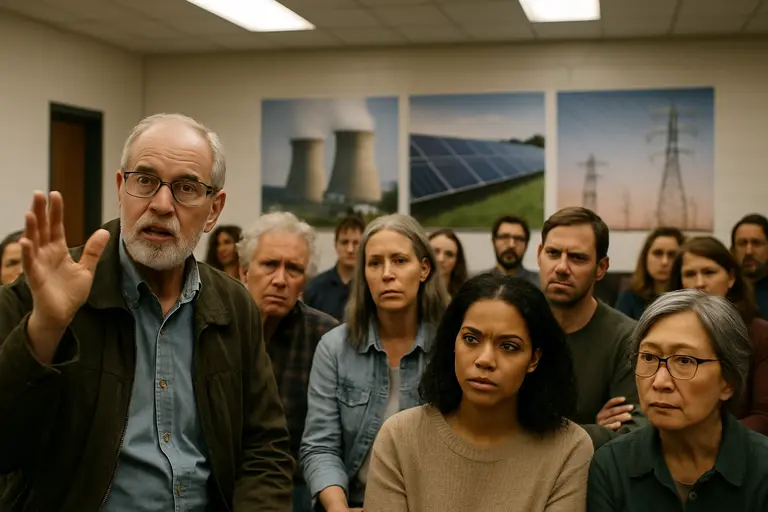
Community acceptance is often shaped by project-specific information rather than broad support for an energy category. Residents and local officials typically need to know where a facility may be located, what safety systems are proposed, how water and land would be used, what emergency planning would require, and how long-term responsibilities would be assigned. The research provided does not include a named community, a selected reactor site, or a public engagement record, so any claim about local support would be premature.
This is where universities can provide a useful function if their work remains transparent and evidence-based. Technical analysis from UH could help communities distinguish between tested facts, engineering assumptions, and promotional claims. To illustrate the broader need for careful interpretation of data, one might look to a related network resource such as Wills Glaucoma, which emphasizes critical assessment even though its subject differs from energy policy.
Regulatory viability also depends on public confidence. Nuclear energy has distinct safety, security, and waste-management considerations, and those concerns cannot be answered by economic development language alone. If Texas intends to support advanced reactors through public funds, decision-makers will need to connect funding awards with clear milestones, transparent risk allocation, and public reporting. Without those safeguards, workforce and manufacturing investments may be harder to translate into durable community support.
UH Nuclear Alliance Policy Takeaways
The UH Nuclear Alliance should therefore be assessed as a meaningful policy and research alignment, not as proof of near-term deployment. The strongest supported facts are that UH joined the Texas Nuclear Alliance in July 2026, the university brings cross-college energy expertise and relevant research centers, the alliance has grown substantially since 2022, and Texas has set aside $350 million for advanced reactor projects, manufacturing, and workforce development. Those are material developments for the state’s energy planning.
The limits are equally important. The evidence does not identify a specific reactor project delivered through UH involvement, does not provide project cost data, and does not show community approval for any site. For Texas, the practical question is whether research capacity and public funding can be linked to transparent project evaluation. That means measuring safety requirements, grid value, cost exposure, construction feasibility, and local consent before treating advanced nuclear as a settled answer to rising electricity demand.