
AI Oil Production is no longer a narrow software experiment inside oil and gas companies. The available market data indicates a commercial sector with substantial investment, practical use cases, and measurable expectations for value creation. The stronger evidence points to operational applications such as predictive maintenance, automated drilling support, production forecasting, and anomaly detection. The weaker evidence concerns system-wide climate effects, grid demand, and long-term economic risk, where the supplied research notes include estimates but not primary technical documentation suitable for firm conclusions.
For energy analysts, the central question is not whether artificial intelligence can process more field data than a conventional workflow. It can. The harder question is whether the resulting recommendations improve production, safety, and cost control without creating new reliability, governance, or emissions problems. That distinction matters because oil and gas assets are physical systems with high capital cost, safety exposure, and long operating lives. A model that performs well in a controlled software setting may still face limits when deployed across aging equipment, changing geology, variable sensor quality, and mixed vendor systems.
What AI Oil Production Can And Cannot Prove
AI Oil Production In Commercial Use
The strongest evidence in the supplied material is that artificial intelligence is already a commercial category in oil and gas, not only a research concept. Grand View Research valued the global AI in oil and gas market at $5.29 billion in 2024 and projected it to reach $32.98 billion by 2033, with a 22.9% compound annual growth rate from 2025 to 2033, according to its market report. Those figures do not prove that every deployment is profitable, but they do show that operators, suppliers, and investors are assigning material capital to these systems.
The applications described in the research fall into several broad categories. Predictive maintenance uses sensor and equipment data to flag conditions that may precede failure. Automated drilling support applies models to drilling parameters, aiming to reduce nonproductive time and improve control. Production forecasting uses machine learning to analyze field data and estimate output behavior. Safety monitoring systems look for anomalies that may signal equipment stress or operational hazards. These are practical industrial uses, but each depends on data quality, process discipline, and human review.
Evidence Strength And Limits
The evidence base should be read cautiously. Market forecasts are not field trials. They reflect expected spending, vendor activity, and adoption trends, but they do not establish net benefit at a specific well, basin, or company. A production model trained on one reservoir may not transfer cleanly to another. A predictive maintenance tool may reduce unplanned downtime in one asset class but offer less value where sensors are sparse or maintenance records are inconsistent. In short, AI Oil Production is commercialized, but its performance remains site-specific.
Operational Value And Investor Exposure
Forecast Value Versus Realized Savings
The most ambitious economic claim in the supplied research is that digitalization and artificial intelligence in upstream oil and gas could create nearly $500 billion in cumulative value for exploration and production companies between 2026 and 2030, as reported by Rigzone. That estimate is significant, but it should be treated as an opportunity figure rather than guaranteed savings. It likely reflects many categories of potential value, including reduced downtime, better drilling outcomes, improved reservoir decisions, and lower operating friction.
For investors and operators, the risk is that large opportunity estimates can obscure uneven deployment conditions. A company with standardized data systems, modern sensors, and disciplined maintenance processes is better positioned to benefit than an operator with fragmented records and incompatible platforms. Capital spending on software, cloud services, field instrumentation, cybersecurity, and staff training can be substantial, yet the research provided does not include site-level implementation costs. That makes broad claims useful for framing scale, but less useful for judging project-level returns.
Where The Tools May Fit
AI Oil Production tools appear most credible where they support repeatable decisions rather than replace operational responsibility. Examples include ranking wells for inspection, identifying unusual pressure or vibration patterns, testing production scenarios, and assisting drilling teams with parameter selection. These uses can shorten decision cycles, but they do not remove the need for engineering judgment. In safety-critical settings, model outputs should be treated as advisory signals unless the operator has validated the system, documented failure modes, and assigned clear response procedures.
- Predictive maintenance may help prioritize inspection and repair activity when sensor data is reliable.
- Automated drilling support may assist crews, but it does not eliminate geologic uncertainty.
- Production forecasting can improve planning, yet forecast quality depends on representative data.
- Anomaly detection may improve early warning, but it must be paired with operational response capacity.
Grid, Emissions, And Data Constraints
Power Demand Is A Separate System Risk
The oil and gas sector is not the only system affected by artificial intelligence. Computing infrastructure also consumes electricity, and that creates a separate reliability question for local grids. The supplied research notes include claims about data center power demand and fuel use, but the approved high-authority sources available here do not quantify those effects. For that reason, a cautious assessment should separate direct oilfield use of AI from the broader power demand created by AI computing. Readers who are monitoring energy infrastructure issues can explore comprehensive comparisons on this topic at SGTT.
That distinction is not academic. An operator may improve efficiency at the wellsite while the computing infrastructure behind its analytics adds load elsewhere on the power system. Without verified data on energy use by model training, inference, cloud storage, and field communications, it is difficult to assess the net energy balance. The available market evidence supports growing AI adoption in oil and gas, but it does not settle whether these tools reduce or increase total emissions across the full chain of production, computing, and end-use combustion.
Environmental Claims Need Better Evidence
The research set includes estimates suggesting that AI could increase recoverable oil resources and associated greenhouse gas emissions. Those claims may be directionally relevant, since better reservoir characterization and production optimization can support higher output. Still, the supplied high-authority sources used in this assessment do not provide enough technical detail to verify resource additions, baseline assumptions, or emissions accounting boundaries. A cautious reading is that AI could improve extraction efficiency, but the climate effect depends on whether that efficiency displaces higher-emission activity, extends production, increases total consumption, or interacts with policy limits.
For public agencies and communities, this is where transparency matters. If AI-assisted production extends the life of an asset, local impacts may include continued truck traffic, water management needs, methane control obligations, and emergency preparedness requirements. If it reduces equipment failure and improves monitoring, it may lower certain operational risks. The evidence supplied supports the possibility of safety and efficiency gains, but not a universal environmental benefit.
Implementation Barriers For Field Deployment
Data Quality And Integration
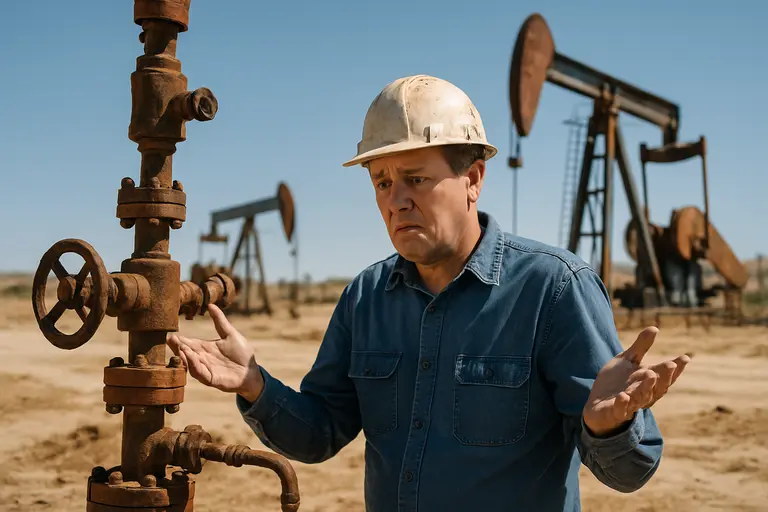
AI Oil Production depends on large volumes of usable data, but oilfield data is often uneven. Some assets have modern sensor networks and consistent digital records. Others rely on older equipment, manual logs, or isolated databases. Poor labeling, missing readings, sensor drift, and inconsistent maintenance histories can reduce model performance. These issues are not peripheral; they affect whether a model can distinguish a real warning signal from noise.
Integration is another barrier. Drilling systems, production software, maintenance platforms, and safety systems may come from different vendors and operate under different data standards. If the model cannot receive timely field data or deliver outputs into an operator’s normal workflow, its practical value falls. Cybersecurity also becomes more significant as more operational systems connect to analytics platforms. The research provided does not quantify these costs, so any assessment of adoption should avoid assuming low-friction deployment.
Safety And Accountability
Safety applications are among the most defensible uses because earlier anomaly detection can give operators more time to respond. Yet detection is only one part of risk management. A warning system must be calibrated, tested, and embedded in procedures that define who acts, how quickly, and under what authority. False positives can create alert fatigue. False negatives can give a misleading sense of protection. Neither risk is unique to oil and gas, but both are consequential in high-hazard industrial operations.
Accountability also matters. If an AI system recommends a drilling adjustment, maintenance delay, or production change, the operator must know whether the recommendation came from validated field conditions or from a pattern that does not apply. Human review is not a barrier to digital adoption; it is part of responsible deployment in systems where mistakes can harm workers, equipment, communities, and energy supply.
AI Oil Production And Operating Discipline
The evidence supports a measured view: artificial intelligence is becoming a material tool in oil and gas operations, with plausible benefits for forecasting, maintenance, drilling support, and safety monitoring. The market size data and upstream value estimates show why companies are investing. They do not prove that every field application will generate savings, improve safety, or reduce emissions.
The practical test for AI Oil Production is not whether the software appears advanced. It is whether operators can validate performance, control costs, protect systems, train workers, and explain decisions under real field conditions. For regulators and local communities, the same caution applies. Efficiency gains may be real, but they should be evaluated alongside power demand, emissions accounting, safety procedures, and asset-level impacts. The technology is commercialized, but the strongest claims still require field-specific evidence.