
The Ameren Transmission Build approved for central Illinois is no longer a proposal on a planning board. On July 2, 2025, the Illinois Commerce Commission issued a final order granting a Certificate of Public Convenience and Necessity for the $1.6 billion Central Illinois Grid Transformation Program, according to Engineering News-Record. The approval moved a large grid project into the implementation phase, but it did not remove the practical barriers that often determine whether transmission benefits arrive on schedule.
The program is significant because it addresses three linked issues: aging high-voltage infrastructure, the need to move power across a wider regional market, and the physical limits that can slow new generation interconnections. The evidence supplied for the project supports a cautious reading: the build could improve reliability and access to lower-cost generation, but land acquisition, permitting, railroad and pipeline crossings, and interconnection studies remain material risks.
Why Approval Matters For Central Illinois
Regulatory Status After July 2, 2025
The July 2, 2025 ICC order gave Ameren the state-level authorization needed to proceed with the project route and related facilities. That matters because high-voltage transmission projects require long lead times before any reliability or market benefit can be measured. Approval does not mean construction risks have been settled; it means the project has cleared a key regulatory threshold and can move through right-of-way, engineering, procurement, and construction sequencing.
The record described several post-approval obligations. These include quarterly updates on right-of-way negotiations, a final wetland-mitigation plan at least 90 days before work begins in any county, endangered-species and cultural-resource reviews, local zoning and building permits, and finalized MISO interconnection studies. Each requirement is a control point. If any one of them slows, the schedule can shift even if the project remains authorized.
Grid Need Versus Project Certainty
The case for the project rests partly on the condition and capability of existing infrastructure. Research materials indicate that portions of the relevant transmission system are more than 50 to 60 years old. Replacing or upgrading such assets can reduce exposure to equipment failure, but reliability improvement is not automatic. Benefits depend on final engineering, outage coordination during construction, line energization timing, and how the upgraded network performs during high-stress events.
This is where transmission planning intersects with wider Illinois energy questions. Delays in network upgrades can affect generation timing, as discussed in analysis of transmission queue backlogs. The Ameren project is not just a local construction program; it is part of a regional transmission system in which grid capacity, interconnection rules, and cost allocation influence which projects reach operation.
What The Ameren Transmission Build Includes
Ameren Transmission Build Scope And Schedule
The Ameren Transmission Build covers about 380 miles of new or upgraded 345-kilovolt transmission lines, three new substations, and upgrades to five existing substations across 13 central Illinois counties, according to Ameren’s project page. The 345-kV voltage class is used for bulk power movement, so the project is aimed at regional transfer capability rather than only local distribution service.
Ameren’s published schedule said construction was anticipated to begin in mid-2026. Because the present date is October 28, 2026, that start window has already passed; the research provided does not verify whether field construction began on that schedule. The company’s plan called for phased energization through late 2029, with final restoration activities finishing in 2030. That sequence is consistent with the scale of the facilities, but it leaves several years in which weather, materials, route access, and permitting can affect execution.
Technical Scale And Coordination Burden
The coordination challenge is unusually large. Planned circuits will cross or run near 42 railroad segments, 16 major pipeline corridors, and 78 existing high-voltage circuits within half-mile buffers. The project also involves coordination with more than 100 separate infrastructure owners. Those figures matter because transmission construction is not only a question of towers and conductors. Each crossing can require engineering studies, protection plans, construction windows, access agreements, and safety procedures.
For readers interested in comprehensive coverage of related industrial infrastructure, Mengo Industrial offers insights into adjacent project and equipment themes frequently associated with grid construction. In this case, the practical issue is not whether high-voltage technology is mature; it is. The open question is whether the many interfaces across rail, pipeline, road, environmental, and landowner systems can be managed without significant schedule or cost pressure.
Costs, Allocation, And Benefits
Ratepayer Exposure And Regional Cost Sharing
The total expected cost is about $1.6 billion. Within that amount, the transmission-plant component is reported at about $1.29 billion, including roughly $1.225 billion assigned to Ameren Transmission Co. of Illinois and $66 million to Ameren Illinois. Cost allocation is central to the policy debate because roughly 91% of transmission-plant costs are expected to be recovered from the broader MISO Midwest sub-region, while about 8.87% would be borne by downstate Illinois customers in Ameren territory.
That allocation reduces direct exposure for local Ameren customers compared with a structure that placed the full transmission-plant cost on them. Still, 8.87% of a large project is not immaterial for ratepayers, and cost recovery can be sensitive to final capital spending, regulatory treatment, and energization dates. The available research does not provide a customer bill estimate, so any claim about monthly household impact would go beyond the evidence.
Projected Benefits And Their Limits
Project materials cited in the research estimate up to $2.8 billion in financial benefits to Illinois over 20 years. Those benefits are described in terms that include reliability, lower costs, renewable energy access, and related grid value. Such estimates can be useful for comparing large infrastructure proposals, but they are still projections. They depend on assumptions about future congestion, generation mix, outage costs, fuel prices, market flows, and load growth.
The Ameren Transmission Build should therefore be assessed as a field-deployed infrastructure program with modeled benefits, not as a completed reliability outcome. The assets are based on established transmission technology, but the value case will become clearer only after the lines are energized, operated through seasonal peaks, and reflected in congestion and reliability data.
Land, Permitting, And Construction Risks
Easements And Route Constraints
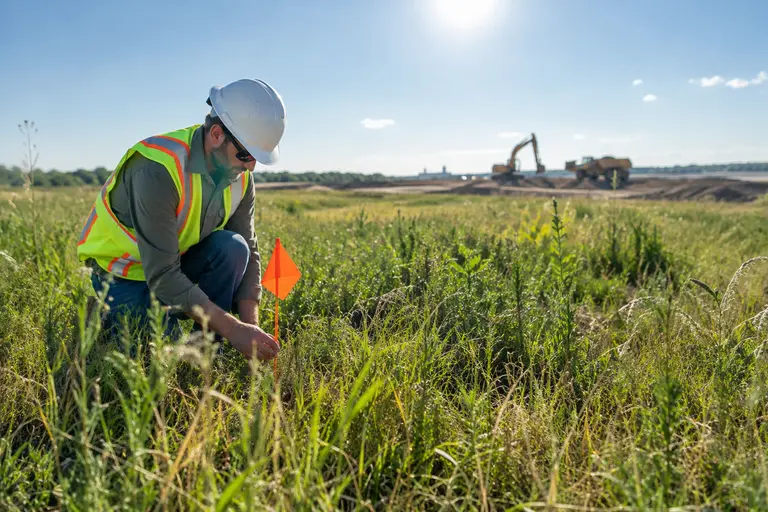
Land impacts are one of the most visible challenges. New towers require easements of about 150 feet in width along new corridors, while existing corridors may require different widths and new negotiations. Landowners are expected to retain ownership and many land use rights outside the easement footprint. Research materials indicate that farming, grazing, and hunting often remain permissible, and that compensation can include one-time easement payments and crop-loss payments.
Those terms may reduce some impacts, but they do not eliminate local concern. Opposition raised in the proceeding included crop-land loss, health and land-use concerns, requests to minimize new permanent easements by co-locating facilities with existing corridors, and the possible use of eminent domain if voluntary negotiations fail. These are not minor administrative details. They affect trust, route access, and the social acceptance needed for a multi-county build.
Why Route Changes Were Limited
Research notes indicate that proposed route deviations during public hearings were rejected because they could raise costs by 2% to 4% or require additional substation work. That illustrates a common transmission tradeoff: a change that reduces impact in one location can shift cost, engineering requirements, or land impacts elsewhere. From an evidence-based planning standpoint, the issue is not whether every deviation is good or bad. The issue is whether regulators and developers can document why selected routes minimize harm while still meeting electrical and economic requirements.
Environmental and cultural-resource reviews add another layer. Wetland mitigation must be finalized before county-level work begins, and endangered-species and cultural-resource reviews can affect timing and construction methods. These safeguards are necessary, but they also reduce the margin for a compressed schedule.
Ameren Transmission Build Assessment For Central Illinois
The Ameren Transmission Build has a clear public-policy rationale: it targets aging transmission assets, expands 345-kV transfer capability, and may improve access to lower-cost renewable generation across central Illinois and the wider MISO region. The approved scope is large enough to matter, with 380 miles of lines, three new substations, and five substation upgrades across 13 counties.
The main caution is that approval is not the same as delivery. As of October 28, 2026, the mid-2026 construction start window identified in the research has passed, but the provided material does not confirm actual construction status. The scheduled late-2029 phased energization and 2030 restoration target remain future milestones that depend on land access, permitting, infrastructure-owner coordination, and final interconnection work.
For central Illinois, the project’s value should be judged against measured outcomes: whether it is completed near the planned cost, whether easement disputes are resolved without prolonged delay, whether grid reliability metrics improve after energization, and whether congestion and renewable access benefits appear in market data. The evidence supports the need for serious transmission investment. It also supports a cautious view of execution risk.