
Recent debate over energy permitting reform reflects a practical tension in U.S. energy policy: lawmakers want faster approval of energy and infrastructure projects, while communities, agencies, and courts still need enough time to evaluate environmental, land use, and public-interest questions. The current evidence from federal legislation does not show that faster reviews alone will solve grid reliability or project cost problems. It does show that Congress is testing procedural changes that could alter how quickly projects move from application to final federal decision.
Two bills are central to the recent record. The Energy Permitting Reform Act of 2024, introduced by Senators Joe Manchin and John Barrasso on July 23, 2024, was described by the Senate Energy and Natural Resources Committee as a bipartisan effort to accelerate permitting for critical energy and mineral projects Senate release. The House later backed the SPEED Act, a bill aimed at speeding permitting reviews for energy and infrastructure projects, by a 221-196 vote on December 18, 2025 AP report. Passage in one chamber, however, is not the same as final enactment.
Energy Permitting Reform In Recent Bills
Energy Permitting Reform Timeline
The EPRA’s introduction in July 2024 and subsequent committee action placed permitting policy into a recurring congressional debate over energy supply, minerals, transmission, and federal review capacity. According to the research record, the Senate Energy and Natural Resources Committee approved the EPRA on July 31, 2024, by a bipartisan vote of 15-4. That committee vote indicates cross-party interest, but it does not by itself resolve the bill’s most contested details.
The House’s later approval of the SPEED Act shows that similar concerns remained active in 2025. The available reporting identifies the SPEED Act as a bipartisan bill designed to speed reviews for new energy and infrastructure projects. The vote margin, 221-196, suggests support but also clear disagreement. A narrow or divided vote matters for implementation because permitting statutes often depend on later agency rules, court interpretation, and appropriations for staff and technical review.
What The Bills Seek To Change
The common thread is procedural acceleration. Recent proposals seek shorter timelines, clearer agency responsibilities, and a reduced risk that reviews remain open for years. The research notes also identify provisions in the EPRA that would reduce the statute of limitations for lawsuits challenging certain energy or mineral project permits from six years to 150 days. That kind of change could shorten legal uncertainty for developers, but it may also limit the time available for affected parties to assess agency records and decide whether to sue.
Another reported EPRA feature would require courts to prioritize permitting cases and would require agencies to act within 180 days if a court sends an authorization back for further work. These provisions aim to prevent long periods of inaction after litigation. The policy question is whether those deadlines improve discipline without weakening the quality of agency analysis. The research available here does not provide project-level outcomes, so claims about cost savings, emissions effects, or reliability gains should be treated as unproven unless supported by later data.
Why Faster Reviews Matter For The Grid
Transmission And Generation Timing
Permitting delays can affect the timing of energy infrastructure, especially where generation, transmission, mining, or related facilities require federal authorization. For grid planners, timing matters because power plants, transmission lines, and supporting infrastructure need to come online in a coordinated sequence. If one part of the system is delayed while another proceeds, the result may be unused generation capacity, constrained delivery, or higher reliance on existing assets for longer than planned.
This is where energy permitting reform has attracted support from lawmakers in both parties. The argument is not that every project should be approved, but that the review process should deliver decisions within a clearer period. A faster denial can be as useful for planning as a faster approval, because developers, utilities, and communities can adjust rather than waiting through open-ended review. Still, faster administrative action is only one variable. Financing, interconnection queues, local siting disputes, supply chains, and labor availability can all shape whether an approved project is built.
Implementation Barriers Beyond Statutory Deadlines
Legislative deadlines can create pressure, but they do not automatically create analytical capacity inside agencies. Environmental reviews require staff, technical expertise, public engagement, and coordination among federal, state, tribal, and local authorities. The 2023 Fiscal Responsibility Act changes cited in the research record included measures such as interagency coordination, deadlines, and page limits for environmental reviews. Those reforms point to a broader policy approach: shorten the process by clarifying who leads the review and what the record must contain.
There is a practical limit to this approach. Page limits may reduce duplication, but they do not remove the need to study site-specific effects. Deadlines may reduce drift, but they can create pressure if agencies lack staff. Digital permitting platforms, such as the ePermit Act described in the research notes, may improve transparency and tracking, yet digitization cannot settle disputes over land use, water, habitat, or community burden. These are governance problems as much as paperwork problems.
Legal Review And Environmental Limits
Shorter Lawsuit Windows
The proposed reduction in the lawsuit window from six years to 150 days is one of the most consequential items in the research notes. For project sponsors, a shorter statute of limitations may reduce prolonged uncertainty after a permit is issued. For local residents, tribes, environmental groups, or competing land users, it may require much faster legal assessment of technical records. That tradeoff should be evaluated with care because the ability to challenge agency decisions is part of the accountability structure of federal permitting.
Judicial review is not only a delay mechanism. It can also identify gaps in agency reasoning, failures to consider required information, or procedural errors. At the same time, litigation that begins years after a permit can create major uncertainty for projects that have already secured financing or begun development. Energy permitting reform therefore sits between two public interests: timely infrastructure decisions and credible review of government action.
Environmental Review Is Not A Formality
Recent permitting bills are often discussed as tools for infrastructure delivery, but federal environmental review is intended to inform decisions before impacts occur. The research record references reforms to the National Environmental Policy Act process in 2023, including coordination, deadlines, and page limits. Those changes show that Congress has already altered review procedures, even before later bills such as the EPRA, SPEED Act, ePermit Act, and PERMIT Act entered the debate.
The evidence available here does not establish whether those procedural changes have improved environmental outcomes or reduced project delays at scale. That distinction matters. A law can shorten an official review period while disputes shift to earlier scoping, state permitting, local zoning, or post-approval litigation. Careful evaluation will require data on review duration, approval rates, litigation frequency, remands, project completion, and community impacts after reforms take effect.
Community Effects And Public Trust
Local Information Needs
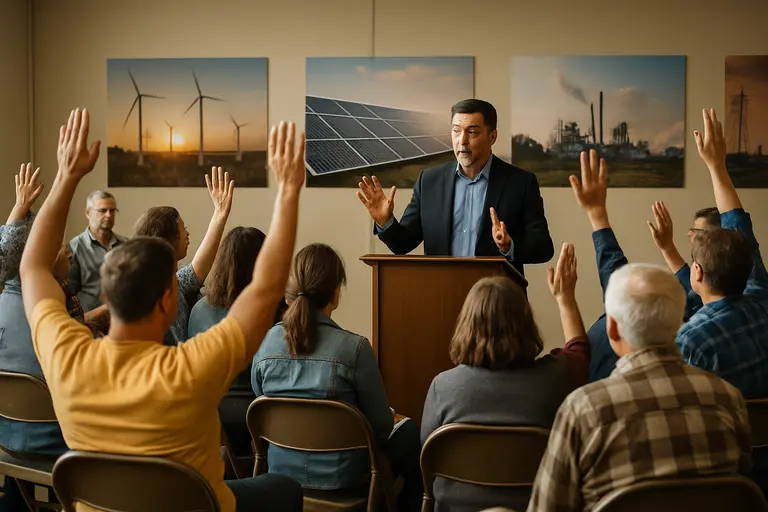
For local communities, the central concern is not only speed. Residents often want clear information about where a project will be built, which resources may be affected, how construction will change traffic or land use, and what long-term obligations will remain after completion. A shorter federal review process can still be meaningful if public notice, comment periods, and agency responses are clear enough for non-specialists to understand.
Specialized information sites vary widely in subject matter, but they share a need for clear boundaries between evidence and interpretation. Readers who use related public-interest resources in the same network, such as Wills Glaucoma, may recognize the value of narrow, careful explanations rather than broad claims. The same standard applies here: permitting policy should be assessed by what the laws actually change, not by claims that faster review will automatically reduce costs or improve reliability.
Equity And Participation Risks
Shortened timelines can have uneven effects. Well-funded developers and national organizations may adapt quickly to new filing windows, while smaller local groups may need more time to obtain documents, consult experts, and organize comments. That does not mean deadlines are inherently harmful. It does mean that public access to records, early notice, translation where needed, and clear agency explanations become more significant when review periods are compressed.
Community trust is also tied to consistency. If deadlines are enforced only for some agencies or some project types, stakeholders may view reform as selective. If deadlines apply broadly but agencies lack capacity, the result may be faster but weaker records that are vulnerable to remand. Either outcome could reduce confidence in the process. Empirical tracking after enactment is the only reliable way to know whether new procedures improve performance.
Energy Permitting Reform And Local Accountability
The recent bills show that energy permitting reform has moved from a technical agency issue to a central energy-policy debate. The supported facts are narrower than many public claims: the EPRA was introduced in 2024 with bipartisan sponsorship, the Senate committee advanced it by a bipartisan vote, and the House later passed the SPEED Act in 2025. The research notes also identify proposed changes to lawsuit windows, court handling, agency remand deadlines, digital permitting, and Clean Water Act review clarity.
The main uncertainty is impact. Faster procedures may help align energy projects with rising infrastructure needs, but the available evidence does not prove that these bills will lower consumer costs, reduce grid bottlenecks, or improve environmental outcomes. Those effects depend on agency capacity, court interpretation, state and local rules, and whether approved projects are actually financed and built. A cautious policy assessment should track measurable outcomes after each reform: review time, litigation timing, remand rates, public participation, and completed infrastructure. Without those data, the strongest conclusion is that Congress is trying to shorten permitting timelines while still debating how much process is needed for accountability.