
Illinois capacity needs became clearer in the 2025 Resource Adequacy Study, which assessed how load growth, generator retirements, new resource accreditation, and regional market dependence could affect reliability through the 2030s and beyond. The study does not show a single deterministic outcome. It presents a planning problem: Illinois may retain adequate local resources into the early 2030s under baseline assumptions, while the broader PJM and MISO regions face material shortfall risks if new capacity, transmission, and demand-side resources do not arrive on schedule.
The central policy issue is timing. Illinois is retiring thermal capacity under the Climate and Equitable Jobs Act while seeking to add renewable generation, storage, and demand response. The study’s baseline case indicates that PJM could begin experiencing a capacity shortfall in 2029, while MISO could face one in 2031. By 2035, the estimated shortfall reaches about 28 gigawatts in PJM and about 32 gigawatts in MISO under baseline supply and demand assumptions. Those figures do not prove that outages will occur, but they do identify a widening gap between accredited supply and reliability requirements if assumed conditions hold.
Illinois Capacity Needs In The Study
Illinois Capacity Needs And Regional Timing
The 2025 Resource Adequacy Study is most useful when read as a regional reliability assessment rather than a narrow inventory of in-state power plants. Illinois sits in two organized wholesale markets: northern Illinois is within PJM, while much of central and southern Illinois is in MISO Local Resource Zone 4. The study indicates that Illinois’ two local zones are projected to maintain resource adequacy into the early 2030s under baseline assumptions, but with rising dependence on imports from their respective regional transmission organizations.
That distinction matters. A local zone can appear adequate while still becoming more exposed to conditions in the wider market. If PJM or MISO faces a broader capacity deficit, Illinois may have less confidence that imports will be available during tight system conditions. The study’s baseline timing places PJM’s first shortfall in 2029 and MISO’s in 2031, with larger shortfalls by 2035, according to the 2025 Resource Adequacy Study.
Demand Growth And Accreditation Effects
The study’s demand-side findings are especially significant for Illinois capacity needs because reliability requirements are rising while the resource mix is changing. Between 2025 and 2030, PJM’s resource adequacy requirement is forecast to rise by roughly 20%, driven largely by rapid load growth from data center developments and native load increases. MISO’s requirement is expected to grow by about 10% over the same period. These are planning values, not guarantees, but they set the scale of the capacity challenge.
The report also separates nameplate capacity from accredited capacity. That distinction is essential for wind, solar, storage, and thermal resources because system planners count resources based on expected reliability contribution, not maximum output under ideal conditions. By 2030, nearly 87 GW of new capacity is in active stages of development in PJM and more than 72 GW in MISO. After accreditation, however, those contributions fall to about 27 GW in PJM and about 28 GW in MISO. The gap between nameplate and accredited capacity is not an argument against clean resources; it is a reminder that resource adequacy planning depends on performance during high-risk hours.
Retirements, Extensions, And Capacity Balance
Base Case Retirements Under CEJA
Retirements are a major driver of the capacity balance. The study identifies substantial retirement volumes under the Climate and Equitable Jobs Act. PJM is expected to retire nearly 15 GW of accredited capacity, while MISO is expected to retire about 18 GW through 2030 and beyond. Most of these retirements come from aging thermal units, including coal and natural gas plants. The timing of those retirements affects how much replacement capacity must be in service, accredited, and deliverable through the transmission network.
For Illinois specifically, cumulative retirements under the Base case grow from around 10 GW by 2030 to approximately 23 GW by 2045. The retired technologies include coal, oil, gas combined-cycle, and gas combustion-turbine units. This is a long-term transition, but the near-term concern is whether the replacement portfolio can meet reliability standards during the years when retirements, demand growth, and regional shortfalls overlap.
What Extension Cases Do And Do Not Solve
The study also evaluates CEJA Extension scenarios, including delayed retirements for some resources. Under those scenarios, cumulative retired capacity is significantly lower: about 5 GW of coal by 2035, with little to no added gas-unit retirements in the extension case. That changes the capacity balance, but the study’s findings suggest that delayed retirements alone provide only a modest and conditional improvement.
This point is central to interpreting Illinois capacity needs. Deferring some fossil retirements may reduce near-term pressure, but it does not eliminate the wider shortfall risk in PJM and MISO. Regional demand growth, interconnection delays, transmission limits, and resource accreditation still shape the reliability outlook. In other words, retirement timing is one policy lever, not a complete reliability plan. The final study filing supports that more cautious reading of the extension cases.
| Planning Area | Key Study Finding | Reliability Implication |
|---|---|---|
| PJM | Shortfall projected to begin in 2029 under baseline assumptions | Illinois’ ComEd zone may rely more on imports during tight conditions |
| MISO | Shortfall projected to begin in 2031 under baseline assumptions | LRZ 4 may become more exposed to wider regional constraints |
| Illinois Base Case | Retirements rise from about 10 GW by 2030 to about 23 GW by 2045 | Replacement resources must be built, accredited, and deliverable |
Planning Barriers That Shape Reliability
Transmission And Interconnection Constraints
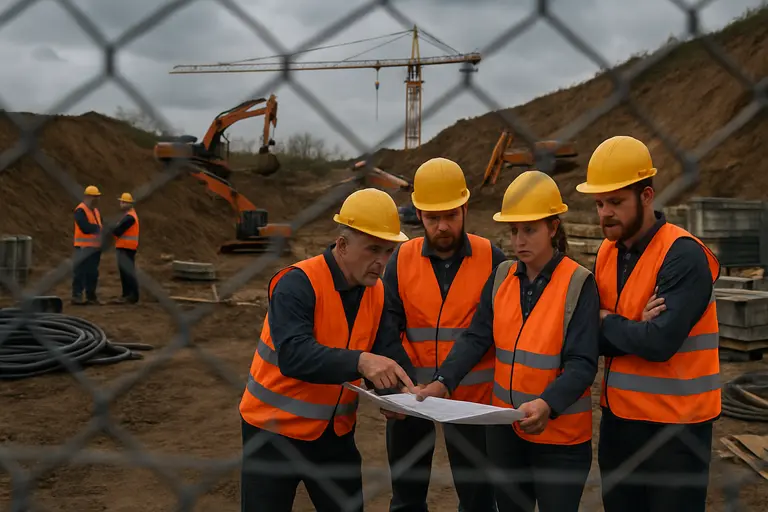
The study emphasizes that new resource development alone is not enough. Projects must clear interconnection, secure approvals, obtain financing, and connect to a transmission system capable of delivering energy where it is needed. Delays in interconnection, siting, or regulatory approvals could worsen projected shortfalls. This is particularly important because large volumes of planned resources receive lower accredited values than their nameplate ratings.
Illinois capacity needs therefore depend on both the quantity and quality of new additions. Storage, demand response, wind, and solar can all contribute to resource adequacy, but their contribution depends on performance during constrained periods and on how regional markets accredit them. Related state planning debates are already examining how reliability, affordability, storage, and public review fit into the next planning cycle, including the Illinois Integrated Resource Plan.
Why Local Adequacy Is Not The Full Test
Illinois’ projected local adequacy into the early 2030s should not be read as a reason to defer planning. The study indicates that the state’s zones may remain adequate under baseline assumptions, yet become more dependent on imports. That dependency raises a practical question: what happens if neighboring areas are also capacity-constrained at the same time?
The evidence does not support a claim that Illinois faces an immediate, unavoidable reliability failure. It does support a more restrained conclusion: the margin for delay narrows as regional shortfalls approach, retirements accumulate, and demand forecasts rise. For readers interested in related evidence-based science and energy analysis, the Harvard Science Review offers additional insights into these complex issues as part of the same publishing network.
- New resources must move from development queues into commercial operation.
- Accredited capacity, not nameplate capacity, determines reliability value.
- Transmission constraints can limit the usefulness of otherwise viable projects.
- Delayed retirements may help at the margin but do not remove regional shortfall risks.
Illinois Capacity Needs Under The 2025 Study
The 2025 Resource Adequacy Study frames Illinois capacity needs as a coordination problem across policy, markets, and infrastructure. The state’s clean energy goals require retirement of higher-emitting thermal resources, while reliability rules require enough accredited capacity to serve load during stressed conditions. Those objectives can be aligned, but the study suggests that alignment depends on execution rather than targets alone.
The practical takeaway is cautious. Illinois has time to manage the transition, but not unlimited time. PJM’s 2029 baseline shortfall date and MISO’s 2031 date create a planning window in which procurement, transmission upgrades, storage deployment, demand response, and siting decisions need to move faster than historical delays would allow. The study’s numbers do not settle every policy question, but they give lawmakers, regulators, utilities, developers, and communities a shared evidence base for assessing whether the state’s future resource mix can meet reliability needs.